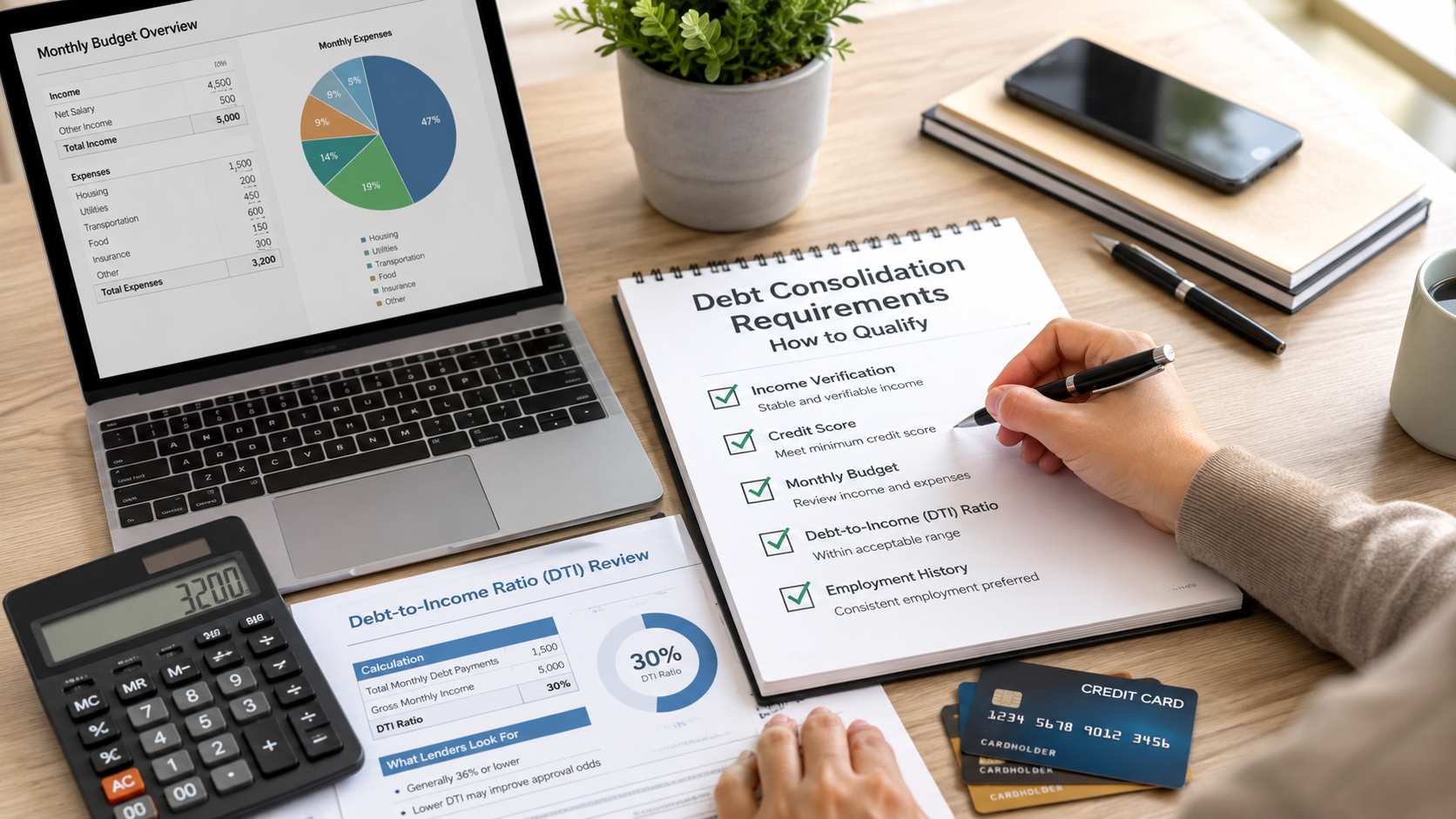
If you’re struggling to manage multiple debt payments, debt consolidation may offer a way to simplify repayment. However, not everyone qualifies. Lenders evaluate several financial factors before approving an application, including your credit profile, income, existing debt and the types of accounts you want to consolidate. Understanding debt consolidation requirements can help you determine whether you may qualify and which options may be available.
What Are Debt Consolidation Requirements?
Debt consolidation requirements are the financial qualifications lenders use to determine whether an applicant is eligible for a consolidation loan or another debt consolidation option. While every lender has its own approval criteria, most review similar information, including your credit score, payment history, income, debt-to-income ratio and employment status.
The exact requirements for debt consolidation may also depend on the type of consolidation you’re pursuing. For example, a personal loan may have different qualifications than a balance transfer credit card or a home equity loan.
Credit Score Requirements for Debt Consolidation
Your credit score is one of the first factors lenders review when evaluating debt consolidation loan requirements. A stronger score generally increases your approval odds and may improve your chances of qualifying for certain loan terms.
That said, there isn’t a universal minimum score required. Some lenders work with borrowers with fair credit, while others offer their best rates to applicants with good or excellent credit. If your credit score is lower, you may still have options, although the available loan terms could differ.
Minimum Credit Score Thresholds
Most lenders prefer borrowers with credit scores in the mid-600s or higher, but minimum requirements vary. Some lenders may approve applicants with lower scores if they demonstrate steady income, manageable debt levels or other signs that they’re likely to pay back what they borrow within the agreed-upon terms.
While your credit score can help with screening eligibility, many lenders consider your overall financial picture when evaluating debt consolidation qualifications.
How Your Credit History Affects Approval Odds
Beyond your credit score, lenders also examine your credit history. They may review factors such as:
- On-time payment history
- Length of credit history
- Recent credit inquiries
- Existing loan balances
- Previous bankruptcies or accounts in collections
A history of on-time payments can strengthen your application, while multiple missed payments or recent defaults may make approval more difficult. Understanding how debt consolidation affects your credit can also help you set realistic expectations before applying.
Debt-to-Income Ratio and Income Verification Requirements
Another important part of debt consolidation loan qualifications is your debt-to-income (DTI) ratio. This compares your monthly debt payments to your gross monthly income and helps lenders evaluate whether you can reasonably afford another loan payment.
Many lenders also require proof of income, which may include:
- Recent pay stubs
- Tax returns
- Bank statements
- W-2 forms
- Proof of self-employment income
Stable income often improves your approval chances because it demonstrates your ability to repay the loan according to its terms.
Types of Debt That Qualify for Consolidation
Most debt consolidation programs focus on unsecured debts. Applicants generally need multiple eligible unsecured debts that can be combined into a single monthly payment. Common debts that may qualify include:
- Credit card balances
- Personal loans
- Medical bills
- Collection accounts
- Certain unsecured lines of credit
Consolidating multiple unsecured debts into one payment may simplify repayment and make it easier to stay organized. If you’re still deciding whether this strategy makes sense for your situation, this guide on whether debt consolidation is a good idea provides additional information.
Debts That Are Usually Excluded
Not every debt is eligible for consolidation. Depending on the lender and loan product, the following debts may be excluded:
- Mortgages
- Auto loans
- Federal student loans
- Tax debt
- Child support or alimony obligations
- Secured business loans
Some specialized financial programs may address these obligations, but they typically fall outside traditional debt consolidation loan programs.
Secured vs. Unsecured Debt Consolidation: Collateral Requirements
Whether collateral is required depends on the type of consolidation loan you choose.
An unsecured debt consolidation loan generally doesn’t require collateral. Approval is based primarily on your creditworthiness, income and overall financial profile.
A secured consolidation loan uses an asset, such as your home, as collateral. Qualification requirements and loan terms may differ from those of unsecured loans because the loan is backed by collateral. However, failing to repay the loan could place the pledged asset at risk.
Understanding these differences is an important part of determining what qualifies you for debt consolidation and selecting the option that aligns with your financial goals.
Debt Consolidation Loan Requirements vs. Balance Transfer Requirements
Although both options combine debt, they have different qualification standards.
Debt consolidation loans typically require a review of your credit score, income, employment and debt-to-income ratio before approval.
Balance transfer credit cards usually place greater emphasis on your credit score because the issuer is extending a revolving line of credit. Applicants with stronger credit profiles are generally more likely to qualify for promotional introductory interest rates.
Choosing between these options depends on your current financial situation, repayment goals and the amount of debt you need to consolidate.
Do You Qualify for Debt Consolidation?
Every lender uses its own approval criteria, so there is no single checklist that guarantees approval. However, borrowers who demonstrate stable income, manageable debt levels, responsible credit habits and the ability to repay a loan often have stronger applications.
If you aren’t sure how to qualify for debt consolidation, reviewing your credit report, calculating your debt-to-income ratio and understanding your available options are good places to start. You can also learn what debt consolidation is if you’re unfamiliar with the process or explore additional personal finance resources to help you prepare before applying.

Steven Brachman is the lead content provider for UnitedSettlement.com. A graduate of the University of Michigan with a B.A. in Economics, Steven spent several years as a registered representative in the securities industry before moving on to equity research and trading. He is also an experienced test-prep professional and admissions consultant to aspiring graduate business school students. In his spare time, Steven enjoys writing, reading, travel, music and fantasy sports.