If you’re struggling with unsecured debt like credit cards or medical bills, you may be wondering if debt settlement is worth it. The answer depends on your financial situation, goals and ability to manage repayment.
Debt settlement works by negotiating with creditors to reduce the total amount you owe. While this can make repayment more manageable, it also comes with risks and tradeoffs.
Understanding how debt settlement works—and when it makes sense—can help you decide if it’s the right option.
Who Is Debt Settlement Worth It For?
Debt settlement may be a good fit if you’re dealing with significant unsecured debt and can’t keep up with payments.
It may be worth considering if:
- You’re only making minimum payments, and balances aren’t going down
- You’ve fallen behind or expect to fall behind soon
- You’re facing financial hardship, such as job loss or reduced income
If your debt feels unmanageable, settlement may help reduce what you owe and create a path forward.
When Is Debt Settlement Worth It?
Debt settlement may be worth it if:
- Your debt is overwhelming and difficult to manage
- Other options, like budgeting or consolidation, aren’t working
- You’re at risk of default or already behind on payments
- You want to avoid filing for bankruptcy
- Your debt is unsecured (such as credit cards, medical bills)
Results depend on your financial situation, your participation in the program and whether creditors agree to settle.
When Is Debt Settlement a Bad Idea?
Debt settlement may not be the right option if:
- You’re current on payments and able to stay on track
- You can realistically pay off your debt over time
- Your debt is secured (such as a mortgage or auto loan)
- You’re not comfortable with missed payments, collections activity, or added stress during negotiations
There are also risks to consider with debt settlement, including possible tax implications on forgiven debt, creditor lawsuits and no guaranteed outcomes.
Will My Credit Score Be Affected?
Yes, debt settlement can impact your credit score. While negotiations are taking place, you may need to stop making payments toward your unsecured debts. Late or missed payments can cause your credit score to drop, though the impact is typically short-term, especially with positive credit habits moving forward.
Keep in mind that settled accounts can also be reported as “settled” instead of “paid in full,” which can stay on your credit report for several years. However, this can be worth it for those who would otherwise continue to fall further into debt.
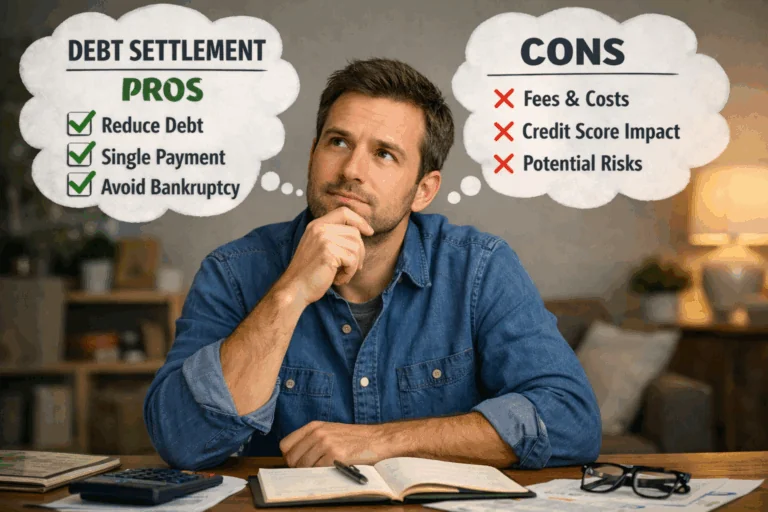
Debt Settlement Pros and Cons
There are potential debt settlement pros and cons to consider when planning your financial future.
Advantages:
- May reduce the total amount you owe
- Can resolve debt faster than making minimum payments
- Provides a structured path to becoming debt-free
Risks:
- Can negatively impact your credit score
- Includes program fees
- Not all creditors will agree to settle
- Results are not guaranteed
Consider scheduling a free consultation for help working through your options without locking into any program until you’re ready.
How to Evaluate if Debt Settlement Is Worth It for You
To determine if debt settlement is worth it for your situation:
- Review your total debt, income, and expenses
- Determine if you can realistically pay off your debt without help
- Compare alternatives like consolidation or credit counseling
- Speak with a professional to review your options
At United Settlement, we can support with various types of debt, including credit cards, personal loans, private student loans, medical bills, lines of credit and debts in collections.
How to Choose a Debt Settlement Company
If you move forward, choose a company that is clear about its process, fees and timeline.
Look for:
- Transparent pricing and expectations
- Clear explanation of how the program works
- Verified customer reviews and proper accreditation
- Compliance with industry regulations
Avoid companies that guarantee results or pressure you to enroll quickly.
If you’re exploring debt relief options, United Settlement offers a performance-based fee structure, so you only pay when results are achieved.

Steven Brachman is the lead content provider for UnitedSettlement.com. A graduate of the University of Michigan with a B.A. in Economics, Steven spent several years as a registered representative in the securities industry before moving on to equity research and trading. He is also an experienced test-prep professional and admissions consultant to aspiring graduate business school students. In his spare time, Steven enjoys writing, reading, travel, music and fantasy sports.