Debt can feel overwhelming when balances rise faster than you can pay them down. Debt settlement is a structured way to reduce what you owe through negotiation. It’s a process built around realistic goals and clear communication, helping you take meaningful steps toward financial stability. This guide explains what debt settlement is, how debt settlement works and when it may be a helpful option for managing your unsecured debt.
What Is Debt Settlement?
Debt settlement is a financial strategy where a debt settlement company negotiates with creditors on your behalf to reduce what you owe. During this time, you pause regular payments to creditors and direct funds into a dedicated account. Once a settlement is reached, the money in that account is used to pay the agreed-upon reduced balance.
This approach is typically used for unsecured debts like credit cards, personal loans and medical bills. The purpose is to create a path to financial relief without the long-term consequences of bankruptcy. Debt settlement differs from consolidation or credit counseling because the goal is to reduce the total amount owed through negotiation, rather than restructuring repayment terms. Creditors may agree to accept less than the full balance when it increases the likelihood of recovering a portion of the debt.
By addressing your debt directly, settlement can help reduce financial strain and move you closer to regaining control over your finances. This can provide a more realistic path forward for individuals who have unsecured debt balances that are growing because of interest and fees. Although debt settlement does not eliminate debt instantly, it creates an organized strategy for resolving accounts over time with professional support and negotiated agreements.
How Does Debt Settlement Work? Step-by-Step Process
Understanding how the settlement of a debt works can help you set realistic expectations for the process and provide peace of mind. While each case is unique, here’s what the debt settlement process usually looks like:
- Financial assessment: Review your total debt, income and expenses to determine if debt settlement is a viable solution for you. Are your debts unmanageable despite making regular monthly payments? Are you committed to making payments toward a dedicated account that will be used to pay off your settled debts?
- Professional help: While some may be able to negotiate with creditors themselves or with a lawyer, it’s often a good idea to use a skilled debt settlement company. These experts handle negotiations directly, reducing the stress of managing creditors yourself. Make sure you look for someone trustworthy and reliable, such as United Settlement.
- Negotiation: Creditors or collection agencies are contacted to discuss a reduced payoff amount. The timeline and outcome depend on their cooperation and responsiveness. While negotiations take place, you will start making payments to your dedicated account that will be used to pay off the settled debts.
- Debt settlement agreement: Once terms are reached, a debt settlement agreement is created outlining payment terms and final balance details. You must agree to the plan before it moves forward.
- Repayment: You’ll make either a lump-sum payment or a series of installments until the agreed amount is paid in full. Commitment to the repayment plan is crucial for successful debt settlement.
During negotiations, communication between creditors and your debt settlement company becomes a pivotal part of the process. Settlement specialists work to represent hardship details, repayment capabilities and proposed settlement terms in a way that encourages trust and collaboration with creditors. Because each creditor has different internal policies, timelines and approval requirements, negotiation success can vary across accounts.
While the process of settling debt can feel overwhelming, leveraging a company like United Settlement can alleviate much of the stress and offer you support from start to finish. Plus, successful participation in a settlement program can lay the foundation for a strong financial future.
Is Debt Settlement Worth It?
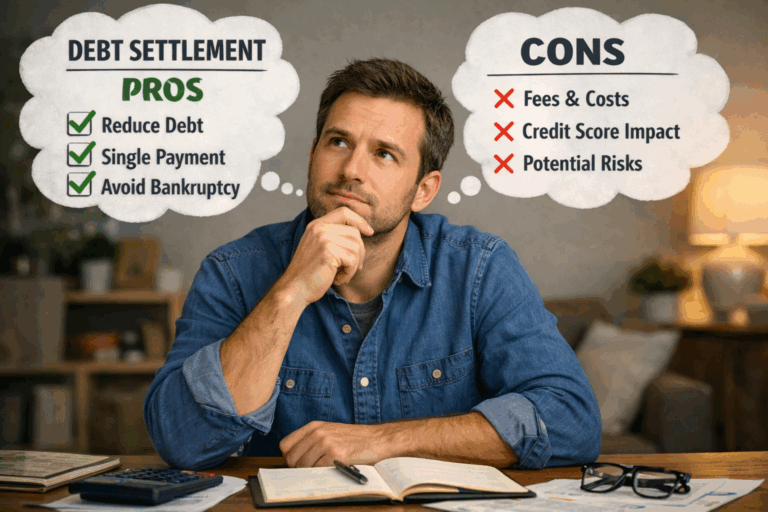
Deciding if debt settlement is worth it depends on your financial goals and current challenges. One of the biggest benefits is the ability to reduce your total debt balance while avoiding the more severe impact of bankruptcy. It can also provide a clear plan for becoming debt-free when it otherwise feels impossible.
However, it’s important to note that settlement of a debt can temporarily affect your credit score, and forgiven debt may have tax implications. The trade-off often comes down to weighing short-term credit impact against long-term financial recovery. For many, settlement provides a practical path toward financial relief and a chance to rebuild over time. Although your credit score may dip initially, becoming debt-free can help you improve your debt-to-income ratio (DTI), ability to make timely payments and other factors that influence credit health.
For those who are facing financial hardship, debt settlement may offer a more manageable option than continuing to make minimum payments that don’t make real progress toward lowering balances. While results vary based on creditor participation and financial circumstances, many individuals pursue settlement because it creates a defined strategy for resolving debt instead of being buried under long-term repayment cycles.
Potential Benefits of Settling Your Debts
Below are some of the key benefits of choosing professional debt settlement:
- Reduce overall repayment: Settlements may result in paying 40–60% of the total owed amount, allowing you to pay back less than you would have without negotiations. However, you will have to pay for professional debt settlement services.
- Avoid bankruptcy: Settlement can help resolve unsecured debt without the long-term damage caused by bankruptcy.
- Achieve faster resolution: Settling debts often takes less time than paying off balances through minimum payments, giving you some financial relief quicker.
- Simplify finances: Instead of managing multiple creditors and payment due dates, debt settlement programs typically involve one consistent monthly deposit into a dedicated account, making budgeting and financial planning easier.
- Relocate money to other financial goals: Reducing balances and limiting fees can help free up funds for essentials, savings and long-term financial priorities.
As with any financial strategy, it’s important to consider the potential risks as well.
What Are the Potential Risks of Settlement?
While settlement can provide relief, there are potential downsides to consider:
- Credit impact: Negotiations may take several months, during which your credit score could temporarily decline.
- Lack of creditor participation: Creditors may choose not to participate, barring you from being able to lower your balances.
- Tax implications: The portion of forgiven debt might be considered taxable income. Understanding these risks ahead of time ensures you enter the process fully informed when it comes time to file.
- Collection activity during negotiations: Creditors may continue their collection efforts while discussions of settlement are in progress.
Weigh the pros and cons of debt settlement, and talk with a professional to help determine if it’s the right solution for you.
What Types of Debts Can Be Settled?
Not every type of debt qualifies for debt settlement, so it’s important to understand which types of debts are eligible before getting started. Settlement typically applies to unsecured debts, meaning the money you owe isn’t tied to property or collateral that a lender can reclaim. Common examples include:
- Credit card debt: One of the most frequently settled types of debt because it’s unsecured and often carries high interest rates.
- Personal loans: These can usually be negotiated if they aren’t backed by assets like a car or home.
- Medical bills: Hospitals and medical offices are often open to reduced lump-sum payments to close overdue accounts.
- Store and retail cards: These fall under the same category as credit card debt and may also be eligible for negotiation.
- Business debt: Certain unsecured business debts—such as credit cards or lines of credit—may be eligible for settlement, depending on the structure of the account.
On the other hand, secured debts, such as mortgages, auto loans and home equity lines of credit, generally can’t be settled through negotiation. These accounts are protected by collateral, which means the lender can repossess or foreclose if payments stop. Student loans are also difficult to settle because they’re governed by federal and private lending regulations that limit forgiveness options.
Certain older unsecured accounts that have already been charged off or transferred to collections may also be eligible for settlement discussions. Eligibility depends on creditor policies, account status and your overall financial hardship. Reviewing your debts with a professional can help determine which accounts may qualify. If most of your debt is unsecured, settlement may be worth exploring as a strategy for long-term relief.
When Is the Right Time to Consider Debt Settlement?
Here are some common catalysts for pursuing debt settlement:
- You’re consistently late or missing payments and falling behind.
- You’re facing high unsecured debt balances with interest rates that make it difficult to make progress.
- You’re trying to avoid filing for bankruptcy to protect against associated long-term consequences.
- You’re only able to make minimum payments while balances continue increasing because of interest charges and fees.
- You’ve experienced a financial hardship such as job loss, medical expenses or reduced income that has made repayment unrealistic under the original loan terms.
If you find that regular payments are no longer sustainable, debt settlement might be a way to regain control before your situation worsens.
Who Qualifies for Debt Settlement?
Eligibility for debt settlement depends on several key factors, including:
- The type of debt (unsecured versus secured)
- Demonstrated financial hardship
- Consistent income to complete the agreement
You may not qualify if most of your debts are secured, you can’t demonstrate hardship, or you lack consistent income.
Many debt settlement companies also review the total amount of unsecured debt you owe and whether you can consistently contribute to a dedicated repayment account. The goal is to determine whether a structured settlement program is financially realistic and sustainable based on your current situation, providing you with financial relief instead of additional stress.
What Is a Debt Settlement Agreement?
A debt settlement agreement is the formal contract that finalizes the terms between you and your creditor. It includes details such as:
- The reduced payment amount
- The repayment structure (lump sum or installments)
- Confirmation that the debt will be considered paid once the terms are met
Before signing, it’s important to review every clause to ensure clarity and accuracy. Always keep a copy for your records, as it serves as proof of resolution.
Common Myths About Debt Settlement
Despite being a legitimate financial tool, debt settlement is often misunderstood. Common myths include:
- Myth: Debt settlement ruins your credit forever. Fact: Credit may dip initially, but can recover with consistent positive payment behavior.
- Myth: Settlement is the same as bankruptcy. Fact: Bankruptcy eliminates debt, while settlement focuses on repayment through negotiation.
- Myth: Creditors never agree to settle. Fact: Many creditors are open to negotiation, especially when repayment is unlikely otherwise.
Understanding these distinctions can make the process less intimidating and more empowering as you take the right steps to strengthen your financial future.
What Are My Other Options vs. Debt Settlement?
If debt settlement doesn’t align with your current situation, other debt relief options may help:
- Debt consolidation: Combining multiple eligible debts into one manageable payment.
- Credit counseling: Getting professional advice on budgeting and repayment.
- Direct negotiation: Contacting creditors to modify payment terms.
Each option has its own advantages, so it’s best to compare outcomes before choosing the one that fits your goals.
Debt Settlement vs Debt Consolidation
Debt settlement and debt consolidation are both debt relief strategies, but they work differently. Debt consolidation combines multiple debts into one loan with a single monthly payment, often with the goal of lowering interest rates and simplifying repayment.
Debt settlement focuses on negotiating with creditors to reduce the total amount owed on eligible unsecured debts. Consolidation is typically best for individuals who can maintain monthly payments, while debt settlement may be more appropriate for those experiencing financial hardship and struggling to keep up with balances.
Debt Settlement Timeline: How Long Does It Take?
Most debt settlement programs take approximately 24 to 48 months to complete, depending on your total enrolled debt, monthly deposit amount and creditor participation. During this time, you make regular deposits into a dedicated account while negotiations take place.
Some accounts may settle sooner than others based on creditor responsiveness and available funds. Staying consistent with your monthly deposits is one of the most important factors in completing the program within the projected settlement timeline.
Taking the First Step Toward Financial Freedom by Settling Your Debt
Choosing debt settlement can be an important step toward long-term financial freedom. It’s a structured way to reduce debt, avoid bankruptcy and regain confidence in your financial future. The process requires patience and consistency, but with the right information and planning, settlement can be a valuable part of your path toward financial recovery.
If you’ve carefully considered your situation and options and think debt settlement could help, contact United Settlement today to confirm eligibility and begin your path toward financial freedom.

Steven Brachman is the lead content provider for UnitedSettlement.com. A graduate of the University of Michigan with a B.A. in Economics, Steven spent several years as a registered representative in the securities industry before moving on to equity research and trading. He is also an experienced test-prep professional and admissions consultant to aspiring graduate business school students. In his spare time, Steven enjoys writing, reading, travel, music and fantasy sports.