Managing multiple debts can quickly become stressful, especially when each balance has different due dates and interest rates. Debt consolidation simplifies repayment by combining several debts into a single monthly payment. For many people, this approach can make it easier to stay organized and see their full repayment picture more clearly.
In this guide, you’ll learn what debt consolidation is, how debt consolidation works and what to consider before choosing this option. Understanding the meaning of debt consolidation and its potential impact can help you make confident, informed decisions about your financial future.
What Is Debt Consolidation?
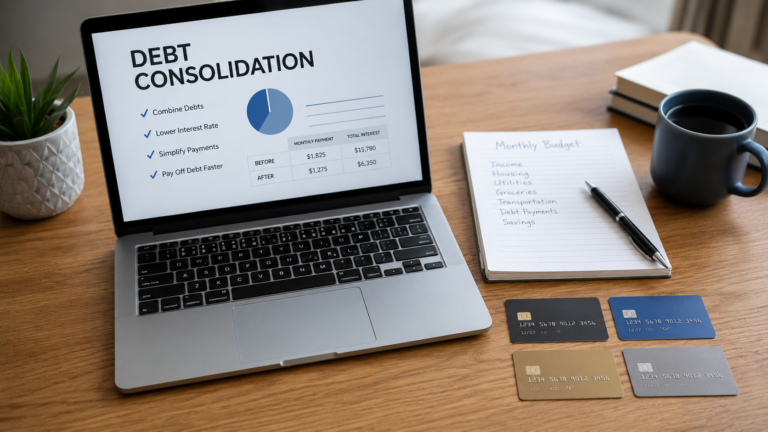
Debt consolidation involves combining multiple qualifying unsecured debts into a single monthly payment. The goal is to simplify repayment by replacing multiple due dates, interest rates and payment amounts with one structured payment.
Depending on the program and qualification requirements, some borrowers may gain access to different loan terms or interest rates than those associated with their existing debts. However, eligibility and potential savings vary based on individual financial circumstances.
How Does Debt Consolidation Work?
Debt consolidation replaces multiple qualifying unsecured debts with a single monthly payment. In many cases, this is accomplished through a debt consolidation loan, although other consolidation programs may also be available.
If approved, funds from the new loan or program are used to pay off eligible existing debts. The borrower then repays the new loan according to its terms, typically through a single monthly payment. Depending on the program, borrowers may choose to keep certain accounts open or close them after repayment.
Because some unsecured debts have variable interest rates, debt consolidation may provide a more consistent repayment structure. This can make it easier to track monthly obligations and plan for future payments.
How Does Debt Consolidation Differ From Other Debt Relief Programs?
When exploring how consolidation of debt works, it helps to understand how it differs from other forms of debt relief. Debt consolidation focuses on repayment rather than reduction. By taking out a new loan or using a balance transfer, you replace multiple high-interest debts with a single account that often offers better terms.
This differs from debt settlement, which seeks to negotiate a lower payoff amount, or credit counseling, which focuses on education and budgeting through a structured management plan. Bankruptcy, meanwhile, can discharge certain debts but often carries long-term credit consequences.
Debt Consolidation | Debt Settlement | Credit Counseling | Bankruptcy |
Focuses on repayment by consolidating debts into a new loan or using a balance transfer | Involves negotiating with creditors to lower debt balances and create a new repayment plan | Focuses on education and budgeting with structured debt management | Certain debts are discharged, though with long-term credit consequences |
Consolidation keeps you responsible for the full balance while helping you manage it more efficiently. Over time, consistent repayment can strengthen your credit and prevent the need for more drastic measures.
Is Debt Consolidation a Good Idea?
Whether consolidation is a good option depends on your overall financial situation. If you have multiple high-interest debts and a reliable income, debt consolidation can make repayment more manageable and potentially lower your total interest costs so you end up paying less in the long run. It can also simplify budgeting by reducing several payments to one predictable monthly amount.
However, there are possible downsides. Consolidation loans may include origination fees or balance transfer costs. Extending your repayment term might also lead to paying more interest over time. Additionally, applying for new credit could cause a temporary dip in your score.
Before deciding, consider whether the monthly payment fits your budget and whether you can commit to consistent on-time payments. For many, consolidation provides a more structured path toward stability and relief from financial stress.
When Does Debt Consolidation Work Best?
Debt consolidation may be worth exploring for individuals who:
- Have multiple unsecured debts, such as credit card balances, medical bills or personal loans.
- Want to combine several monthly payments into a single repayment structure.
- Are managing debt with different interest rates, payment amounts and due dates.
- Are looking for a more organized approach to repaying eligible unsecured debts.
- Want to evaluate whether consolidation may be an alternative to other debt relief options.
Debt consolidation is not the right solution for every financial situation. Eligibility requirements vary by lender and program. Reviewing your circumstances with a debt relief professional can help you understand available options and determine whether consolidation may be appropriate for your needs.
What Types of Debt Can Be Consolidated?
Many types of unsecured debts can be considered for debt consolidation, such as:
- Credit cards
- Personal loans
- Medical bills
- Retail or store cards
- Private student loans
- Lines of credit
- Collection accounts
Secured debts, like mortgages or car loans, usually cannot be consolidated because they’re tied to collateral. For example, a mortgage uses your home as collateral, and a car loan uses your vehicle as collateral. Failure to pay these debts can result in foreclosure or repossession.
Who Should Consider Debt Consolidation?
Debt consolidation loans are often best suited for individuals who have multiple unsecured debts, a steady income and fair to good credit. These borrowers often qualify for loans or balance transfer cards with lower interest rates than their current debts, offering an opportunity to save money. It’s also helpful for those who prefer simplicity and want to avoid missed or late payments. Instead of multiple due dates and payment platforms, you make one payment through one system at the same time each month.
People with poor credit or inconsistent income may not benefit as much, as they could struggle to qualify for favorable terms. In such cases, other debt relief options such as settlement or credit counseling might be more effective. Before applying, review your budget to ensure that a consolidated payment is both realistic and sustainable. You can also chat with the experts at United Settlement for a professional take on which solution best matches your goals.
Pros and Cons of Debt Consolidation
Every financial strategy has trade-offs, including debt consolidation. Be sure to understand potential advantages and disadvantages before moving forward with your chosen debt relief option.
Potential pros of debt consolidation are:
- Combines multiple debts into one easy payment
- May reduce interest rates and simplify repayment
- Helps maintain on-time payments for credit improvement
- Encourages financial discipline and organization
Potential cons of debt consolidation are:
- Could extend repayment and increase total interest
- May involve upfront fees or balance transfer costs
- Requires good credit for the best rates
- Can cause a short-term credit score drop
Carefully consider how these factors align with your financial habits and goals.
How Does Debt Consolidation Affect Your Credit Record?
When you apply for consolidation, lenders perform a credit inquiry, which may cause a slight dip in your score. If a new account is opened or old ones are closed, your credit utilization and account age may also shift temporarily.
While you may not want to see your credit score drop, improving debt management can actually be the catalyst to building a stronger credit history, especially if you’re able to make consistent, on-time payments. Reducing your credit card balances through debt consolidation can also improve your utilization ratio, which plays a major role in your credit score. The key is staying consistent and avoiding new debt while repaying the existing balance.
How Long Does Debt Consolidation Take?
Debt consolidation timelines vary based on the type of program, amount of debt and individual financial circumstances. In many cases, applying for and establishing a debt consolidation loan can take anywhere from a few days to several weeks. Repayment, however, may extend over several years depending on the selected loan or program terms.
The length of repayment is typically determined by the loan agreement or payment plan. Some borrowers choose shorter repayment periods, while others select longer terms that may result in lower monthly payments. Reviewing available options can help borrowers choose a repayment structure that aligns with their financial circumstances and goals.
Can Debt Consolidation Improve Your Financial Stability?
Consolidation can help strengthen financial stability by creating structure and predictability. When multiple debts are replaced with a single monthly payment, it becomes easier to manage your budget, avoid missed payments and reduce stress.
The purpose of debt consolidation is not immediate relief but long-term improvement. It encourages steady progress, better money habits and a clearer path toward financial freedom. Many people find it helps them regain control and achieve lasting financial stability.
Common Myths and Facts About Consolidation
There are several misconceptions about how consolidation of debt works. Let’s review the facts so you can avoid any unnecessary confusion when figuring out how to handle your debt:
- A common myth is that consolidation eliminates debt entirely. In reality, it reorganizes debt, making it easier to manage but not erasing the amount owed.
- Another misunderstanding is that consolidation always saves money. While it often leads to lower interest, the actual outcome depends on credit score, repayment term, and fees.
- Some also believe it permanently damages credit, but consistent on-time payments usually improve it over time.
Knowing the facts helps you approach consolidation with realistic expectations.
Is Debt Consolidation My Only Answer?
Consolidation is just one approach among several debt relief options. Credit counseling can offer guidance and budgeting tools, while debt settlement can negotiate reduced balances for faster resolution. In severe cases, bankruptcy may be considered, though it carries lasting financial consequences.
The right choice depends on your income, total debt and willingness to commit to a repayment plan. Exploring all available options ensures you find the method that best supports your long-term financial health. Professional services like United Settlement can help guide the process.
Achieve Financial Freedom by Consolidating Your Debt
Understanding how debt consolidation loans work gives you the tools to regain control of your finances. By turning several debts into one structured payment, you can simplify repayment, reduce stress and create a realistic path toward financial freedom.
While consolidation is not an instant fix, it can be a powerful way to rebuild confidence and stability over time. With consistency, patience, and the right financial plan, you can use consolidation as a stepping stone toward a debt-free future. Take the next step in mastering your money habits by pursuing debt consolidation with United Settlement today.
Debt Consolidation Glossary
APR (Annual Percentage Rate)
- The interest rate charged on a loan, including any associated fees, expressed as an annual percentage. A lower APR means less interest paid over time.
Secured Debt
- Debt backed by collateral, such as a mortgage or car loan. If you default, the creditor can seize the asset tied to the debt (e.g., your home or car).
Unsecured Debt
- Debt that is not backed by collateral, such as credit card balances, medical bills, and personal loans. These debts can often be consolidated into one loan or repayment plan.
Balance Transfer
- Moving debt from one credit card to another, usually with a 0% interest rate for an introductory period. It’s a way to consolidate credit card debt, but it may come with transfer fees.
Debt-to-Income Ratio (DTI)
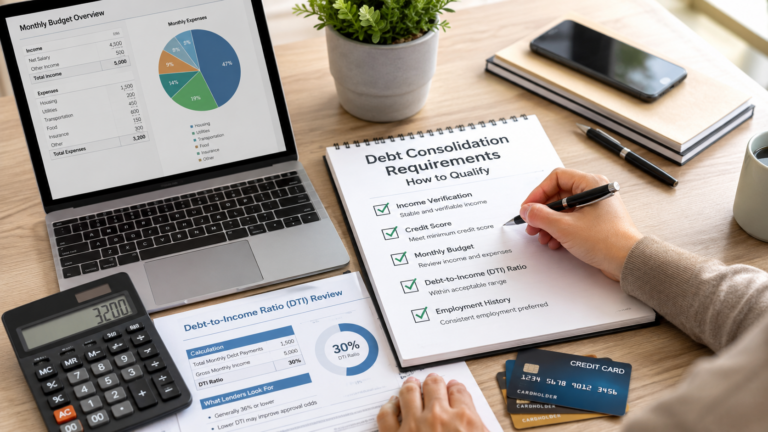
- A measure of your monthly debt payments in relation to your monthly income. It’s a key factor lenders use to evaluate your ability to take on additional debt, including consolidation loans.
Hard Inquiry
- A credit check that occurs when you apply for a loan or credit card. It can slightly lower your credit score temporarily, but it is necessary for lenders to assess your creditworthiness during the consolidation process.
Loan Origination Fee
- A fee charged by lenders for processing a new loan. This fee can be a percentage of the total loan amount and should be factored into the total cost of consolidation.
Credit Utilization Ratio
- The percentage of your available credit that you’re currently using, which is an important factor in your credit score. Consolidating credit card debt into a personal loan or balance transfer can improve your credit utilization ratio.

Steven Brachman is the lead content provider for UnitedSettlement.com. A graduate of the University of Michigan with a B.A. in Economics, Steven spent several years as a registered representative in the securities industry before moving on to equity research and trading. He is also an experienced test-prep professional and admissions consultant to aspiring graduate business school students. In his spare time, Steven enjoys writing, reading, travel, music and fantasy sports.