Debt settlement is often considered by people who are overwhelmed by unsecured debt and unable to make meaningful progress through minimum payments alone. While settlement can provide relief in certain situations, it also involves measurable risks and tradeoffs. Understanding the clear pros and cons of debt settlement can help you determine whether this approach aligns with your financial goals, credit concerns and long-term plans.
Understanding Debt Settlement
Debt settlement is a form of debt relief that involves negotiating unsecured debts for less than the full balance owed. In many cases, debt relief companies attempt to negotiate reduced payoff amounts with creditors, typically through a structured repayment program based on eligibility and creditor participation.
This approach is commonly explored by individuals who want to avoid bankruptcy and are experiencing financial hardship. Because debt settlement does not produce uniform outcomes, reviewing the pros and cons of debt settlement is an important step in setting realistic expectations and comparing settlement with other debt relief options.
Debt Settlement Pros
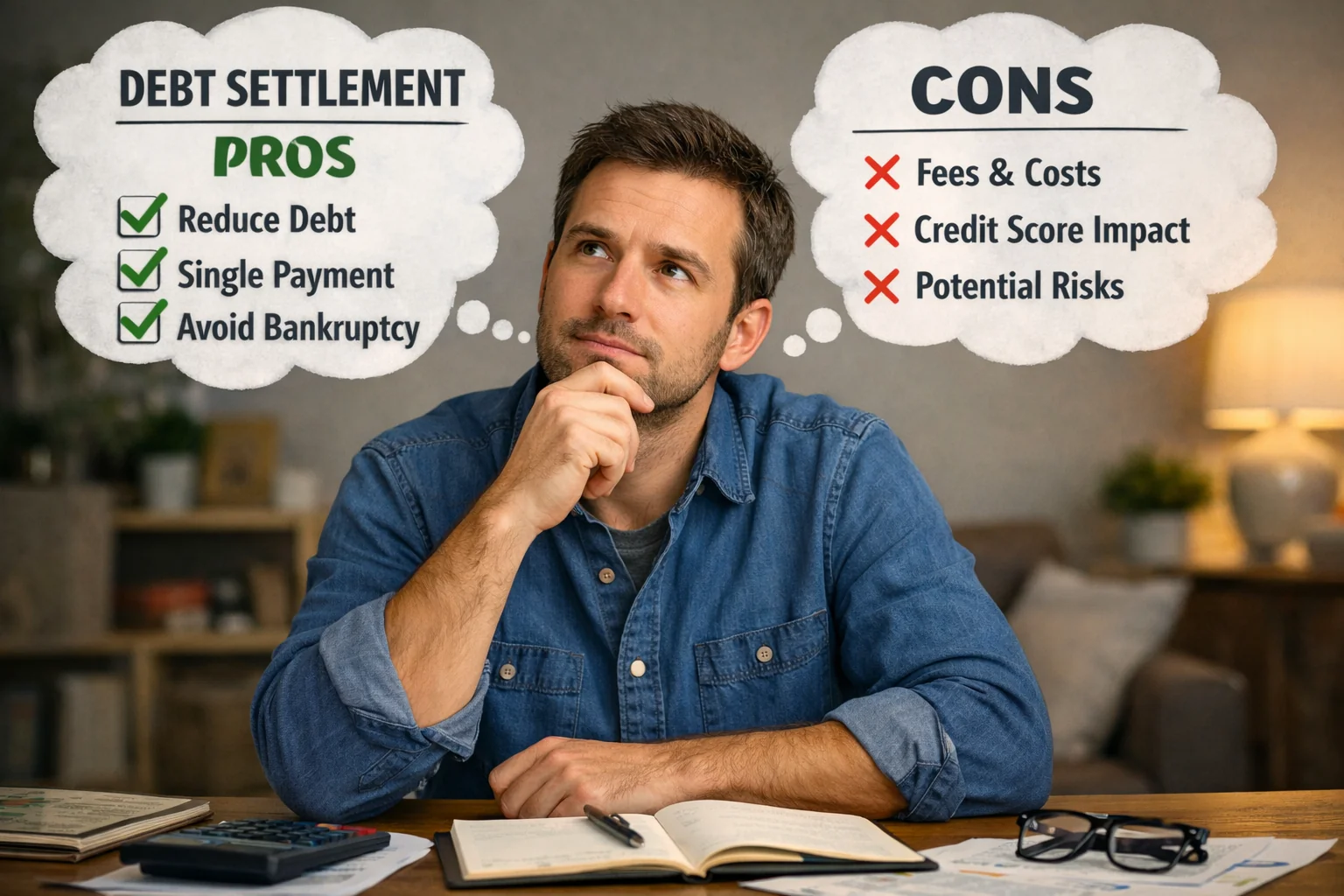
If you are considering debt settlement, potential advantages may include the following:
- Lower balances: One of the primary debt settlement benefits is the potential to reduce the total amount of unsecured debt owed. When creditors accept less than the full balance, settlement may provide a path forward for high-interest credit cards, medical bills or personal loans that have become unaffordable.
- Structured plan to become debt-free: Debt settlement may also offer a clearer path toward resolving debt and closing accounts once agreements are reached, rather than remaining stuck in a cycle of minimum payments.
- Simplified repayment: Another benefit is structure. Many debt settlement programs consolidate multiple unsecured debts into a single monthly deposit, which simplifies budgeting and makes it easier to stay organized.
- Personal relief: For some individuals, debt settlement also provides emotional relief. Taking steps to address overwhelming debt can reduce financial stress and help restore a sense of control during periods of hardship.
Debt Settlement Cons
Despite the potential benefits of debt settlement, it is not appropriate for every situation. Important drawbacks to consider include the following:
- Credit impact: One of the most significant impacts is that settlement can lower your credit scores in the short term, as accounts enrolled in settlement are typically reported as delinquent during negotiations.
- No guaranteed outcomes: Debt settlement outcomes are not guaranteed. Creditors are not required to accept settlement offers, and timelines vary depending on the creditor, debt type and individual circumstances.
- Tax considerations: In some cases, forgiven debt may be reported as taxable income. Individuals are encouraged to consult a qualified tax professional to understand how debt settlement may affect their situation.
- Need for commitment: Finally, debt settlement requires commitment. Programs often span multiple months or years, and consistency is necessary. Missing deposits or leaving a program early may limit progress.
When Is Debt Settlement a Good Idea?
Debt settlement may be a good option for individuals with significant unsecured debt who are experiencing financial hardship and are unable to keep up with minimum payments. It is most often considered when budgeting changes or repayment plans are no longer effective.
Comparing the pros and cons of debt settlement with other debt relief strategies can help determine whether this option aligns with your income stability, financial goals and comfort level with short-term credit impact.
Debt Settlement Pros | Debt Settlement Cons |
May reduce the total amount of unsecured debt owed | Can negatively affect credit scores during the settlement process |
Provides a structured path toward resolving debt | Settlement outcomes and timelines are not guaranteed |
Consolidates multiple debts into one monthly deposit | Forgiven debt may have tax implications |
May help reduce long-term financial stress | Requires constant participation over time |
Are You Ready to Settle Your Debts?
Determining whether debt settlement is the right option begins with a clear review of your unsecured debt, monthly cash flow and long-term financial priorities.
Reviewing the debt settlement pros and cons with a qualified debt professional can help clarify whether settlement or another debt relief option is a better fit. United Settlement offers free consultations and experienced guidance to help you evaluate your options and understand potential outcomes. Explore debt settlement options near you to learn more.

Steven Brachman is the lead content provider for UnitedSettlement.com. A graduate of the University of Michigan with a B.A. in Economics, Steven spent several years as a registered representative in the securities industry before moving on to equity research and trading. He is also an experienced test-prep professional and admissions consultant to aspiring graduate business school students. In his spare time, Steven enjoys writing, reading, travel, music and fantasy sports.