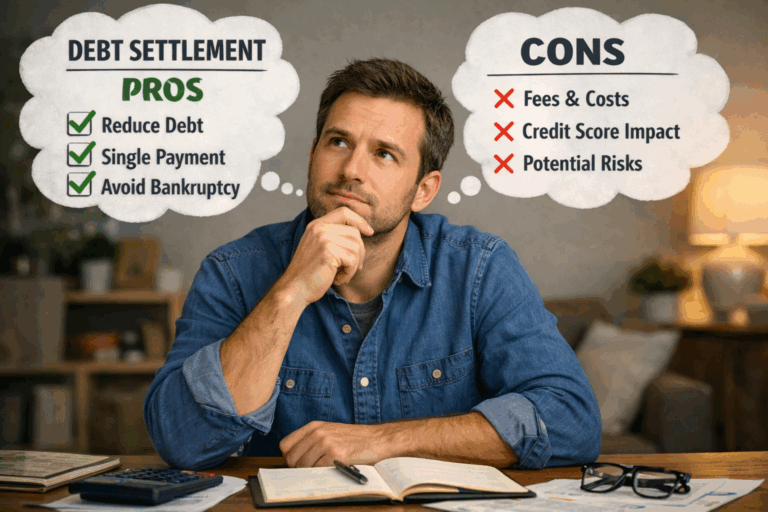
Feeling overwhelmed by multiple debts and searching for a way to simplify your financial life? Debt consolidation can be a great option, but choosing the right company is crucial! Instead of focusing only on flashy rates or low monthly payments, dig a little deeper. Every debt consolidation company has its own unique blend of services, qualification criteria, fees, and repayment options.
To choose the best option, take time to review each company’s credentials, costs, terms, and customer support. Don’t rush into a decision … it often helps to compare a few providers before choosing the one that’s right for you.
Types of Debt Consolidation Companies and Lenders
Several types of debt consolidation companies and providers exist. Some offer loans that combine multiple debts into one account, while others provide counseling or structured repayment programs. Common options include:
- Banks and credit unions
- Online debt consolidation lenders
- Debt consolidation loan companies
- Credit counseling organizations
- Debt relief companies
- Balance transfer credit card providers
The right option depends on factors such as your credit profile, income, debt balances and ability to qualify for financing.
Some debt consolidation loan lenders may require a minimum credit score or income level. Others may consider additional financial information during the application process. Reviewing debt consolidation requirements and how to qualify can help you understand what lenders may consider.
Signs of a Reputable, Legitimate Debt Consolidation Company
Reputable debt consolidation companies should provide clear information about their services, fees and terms before you agree to move forward.
Consumers may want to look for companies that:
- Explain fees in writing
- Clearly identify whether they provide loans, counseling or debt relief services
- Provide realistic information about potential outcomes
- Avoid guaranteeing approval or specific savings
- Make contact information and company details easy to verify
- Provide time to review agreements before signing
Legitimate debt consolidation providers should also explain possible risks and limitations. For example, consolidating debt does not eliminate the underlying balance, and the total cost may vary depending on interest rates, fees and repayment terms.
It may also help to understand how debt consolidation can affect your credit before deciding whether it suits your circumstances.
Debt Consolidation Scams to Watch For
Debt consolidation scams may use misleading claims, pressure tactics or requests for payment without clearly explaining the service being provided.
Potential warning signs may include:
- Guarantees that debt will be eliminated
- Promises of specific savings without reviewing your finances
- Pressure to act immediately
- Requests for personal or banking information before explaining services
- Lack of clear written terms
- Difficulty verifying the company’s location or credentials
Consumers should be cautious of companies that describe debt consolidation as a quick or guaranteed solution. Results depend on the type of program, the amount of debt, eligibility requirements and individual financial circumstances.
Nonprofit Credit Counselors vs. For-Profit Debt Consolidation Lenders
Nonprofit credit counseling organizations offer services like budgeting assistance, financial education, and debt management plans, which involve a single payment that is distributed to creditors. In contrast, for-profit debt consolidation lenders provide loans to pay off multiple debts, with repayment based on the new loan’s terms. Consumers should compare fees, interest rates, repayment periods, eligibility requirements, and total repayment amounts, as neither option is inherently better.
Review what debt consolidation is and the different types of debt consolidation before comparing providers.
How to Verify a Company’s Licensing and Accreditation
Before working with a company, verify that it is permitted to provide the services it offers in your state.
Depending on the provider type, this may include checking state licensing databases, registration records or professional accreditation. Consumers may also review complaint records and publicly available company information.
Licensing requirements vary by state and service type, so a company that operates in one state may not necessarily offer the same services in another.
A legitimate debt consolidation provider should be willing to explain its licensing status and provide relevant information when requested.
Questions to Ask a Debt Consolidation Company Before You Sign
Preparing questions to ask a debt consolidation company can make it easier to compare options.
Consider asking:
- What service are you providing?
- What fees will I pay?
- What interest rate applies?
- How long is the repayment period?
- What debts are eligible?
- Are there any penalties for early repayment?
- How may this affect my credit?
- What happens if I miss a payment?
- Is the company licensed to operate in my state?
- Are there alternatives I should consider?
Consumers should request written documentation and review the agreement carefully before signing.
For additional background, review how to consolidate debt and whether debt consolidation may be a good idea based on your circumstances.
How to Compare Your Options and Make a Decision
When choosing a debt consolidation company, compare more than the advertised monthly payment.
Review the interest rate, fees, repayment term, total repayment amount and eligibility requirements. Also consider whether the company clearly explains its services and provides terms in writing.
A lower monthly payment may result from a longer repayment period, which could increase the total amount paid over time. Similarly, a lower interest rate may not always offset added fees.
United Settlement provides information about debt consolidation and other debt relief options for eligible consumers.
The appropriate choice depends on your financial circumstances, the type of debt you have, and the options available to you. Comparing several providers and reviewing the full terms can help you make a more informed decision.

Steven Brachman is the lead content provider for UnitedSettlement.com. A graduate of the University of Michigan with a B.A. in Economics, Steven spent several years as a registered representative in the securities industry before moving on to equity research and trading. He is also an experienced test-prep professional and admissions consultant to aspiring graduate business school students. In his spare time, Steven enjoys writing, reading, travel, music and fantasy sports.