When debt becomes overwhelming, it can be difficult to see a clear path forward. Debt settlement is one option that can help you regain control of unsecured debt by negotiating with creditors to reduce the total amount owed. If you’re looking for a path to financial freedom, consider the benefits of debt settlement. It’s not a one-size-fits-all strategy, but for many, it can be the first step to relieving financial stress and creating a plan for becoming debt-free.
5 Key Benefits of Debt Settlement
Debt settlement is often a solution for those who need a more manageable way to address their unsecured debts. Learn how debt settlement can provide structure, relief and a path forward if you’re facing persistent financial strain.
1. Potential Reduction of Total Debt Owed
One of the most recognized benefits of debt settlement is the chance to reduce the amount owed through creditor negotiation. While outcomes vary, creditors may agree to accept a lower amount if they believe that settlement offers a better chance of recovering funds than continued missed payments. Even a partial reduction can ease significant pressure and create a clearer path toward resolving your remaining balances.
2. Structured Path Toward Financial Relief
A major advantage of debt settlement is the structure it brings to an otherwise stressful situation. Instead of trying to juggle multiple debts or negotiate alone, you follow an organized plan that guides each step of the process. This structure can create predictability month to month and help you feel less overwhelmed. For many, that clarity becomes a source of motivation for long-term positive money habits.
3. Reduced Risk of Being Sued for Your Debt
Falling behind on payments increases the possibility of legal action. Debt settlement may reduce this risk by establishing open dialogue with creditors and demonstrating an active attempt to resolve your debt. Although settlement cannot prevent all lawsuits, participating in a formal process may help ease certain collection pressures you face when accounts remain unresolved.
4. A Possible Alternative to Bankruptcy
Bankruptcy can offer relief for some people, but it’s a big decision with long-term financial effects. Debt settlement may serve as an alternative if you want to address unsecured debt without filing for bankruptcy. It allows you to work toward a negotiated outcome while keeping other debt relief options available if needed.
5. Opportunity to Improve Your Long-Term Financial Outlook
Completing a settlement program can help reset your financial foundation. While there can be short-term impacts to your credit, eliminating unresolved debt can open the door to rebuilding savings, establishing better budgeting habits, and improving credit behavior over time. For many, the greatest benefit is the renewed sense of control that comes from resolving long-standing financial burdens.
Advantages of Debt Settlement Compared to Other Options
Understanding how settlement compares to other approaches can help you decide whether it aligns with your goals. Take a closer look:
- Debt consolidation simplifies payments through a new loan, but it does not reduce the original balance. You must qualify for the new loan based on credit and income. The debt consolidation loan replaces your existing debts with a new, single monthly payment.
- Credit counseling provides structured repayment with reduced interest rates, though borrowers still repay the full amount. This may not be enough relief if you’re already struggling to meet minimum payments, which prolongs repayment and increases interest costs.
- Debt settlement differs by focusing on negotiating balances rather than refinancing or adjusting interest rates. It may resolve debt more quickly for some, though it also carries specific risks.
Are There Any Potential Disadvantages of Debt Settlement?
It’s common to wonder if settling debt is bad, especially with how many misconceptions there are around debt relief. Whether or not debt settlement is “bad” depends on your needs. For some, it can be what’s needed to get out of debt and regain financial control. For others, such as those struggling with secured debt, it may not be the best option.
If you’re worried about the risks of debt settlement, here are some things to consider:
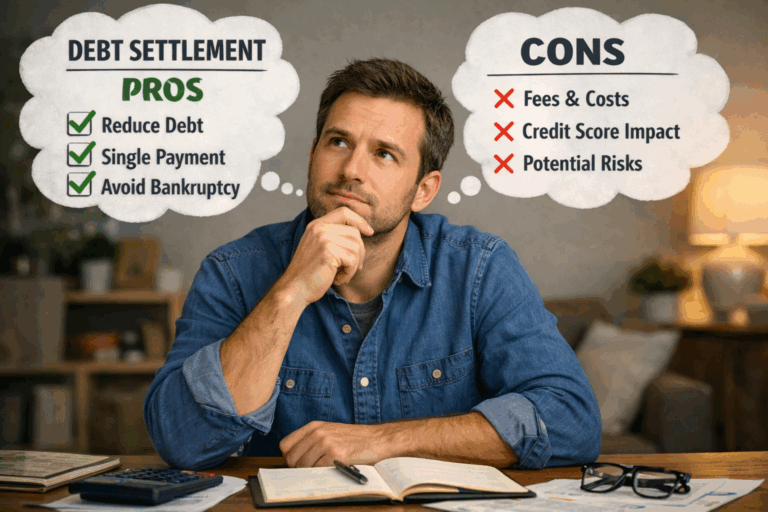
- Credit impact: Credit scores can be affected during the negotiation period.
- Creditor participation: Some creditors may not participate.
- Tax implications: Certain forgiven debt amounts may be considered taxable income.
- Cost: Program fees apply, and not all debt types qualify for settlement.
Keep in mind that for many, the potential benefits that result from debt settlement outweigh the risks, especially when debt relief is needed to start repairing and rebuilding credit.
How to Decide if Debt Settlement Is Right for You
If you’re wondering if debt settlement is right for you, start by reviewing the type of debt you have, how far behind you are on payments, whether collection pressures are increasing and how sustainable your current monthly payments feel. It may help to think about long-term goals and whether you can create a reasonable plan for paying off your debts without any type of settlement or relief.
Ultimately, it’s always a good decision to reach out to a reliable debt settlement company to get your specific questions answered. At United Debt Settlement, we can provide you with a consultation to review your circumstances, answer any questions you may have and present what options we feel could be best for you.
Take the First Step Toward Financial Relief with Debt Settlement
Don’t let debt keep you from believing financial freedom is possible. Explore what debt settlement could look like for you alongside other debt relief options. With the right understanding of how to manage, reduce or get rid of what you owe, you can confidently take control of your finances, establish healthy credit and work toward achieving your financial goals. Contact us today to get started.

Steven Brachman is the lead content provider for UnitedSettlement.com. A graduate of the University of Michigan with a B.A. in Economics, Steven spent several years as a registered representative in the securities industry before moving on to equity research and trading. He is also an experienced test-prep professional and admissions consultant to aspiring graduate business school students. In his spare time, Steven enjoys writing, reading, travel, music and fantasy sports.