If you cannot keep up with your bills, ignoring the problem will only make it worse. Waiting will not fix this. Taking action now, even a small step, keeps the problem from getting bigger. Missed payments may lead to late fees and higher interest charges, which ultimately damages your credit score. You must have a clear plan in place before you stop making your payments.
Assess Your Financial Situation
To address a cash shortfall, you first need to establish exactly how serious it is.
- Make a full list of what you owe.
- For each credit card, write down the balance, the interest rate, the minimum payment, and the due date.
- Calculate your reliable monthly take-home income.
- Sort your spending into two groups: things you need, and things you can live without.
- Subtract your mandatory expenses from your income to see how much cash remains for unsecured debt.
This calculation reveals if you are just short on cash until your next paycheck or if your income is truly too low to cover your minimum payments. Knowing your exact numbers helps you negotiate with facts instead of guessing.
Prioritize Essential Bills First
If you are facing a cash shortage, you should not sacrifice basic necessities simply to make a credit card payment. You need to pay your most important living expenses first. Focus on securing these essential expenses first:
- Housing: Rent or mortgage payments must be prioritized above all else.
- Essential Utilities: Keep the lights, water, and heat on. These bills should be paid before any credit card payment.
- Basic Groceries: Set aside money for food before you allocate anything toward debt.
- Auto Loans and Transportation: If you need your car to get to work, keep that payment current so you don’t lose your ability to earn income.
- Medical Insurance: Keeping your coverage active protects you from a medical bill that could make your debt situation worse.
Credit card debt remains important, but it is unsecured. Never put your basic necessities at risk to pay it. Address these accounts only after securing your basic shelter and survival needs.
Contact Your Credit Card Companies Before Missing Payments
Reaching out early is critical. Credit card companies are usually more willing to help if you call before your account is past due.
When you call customer service, clearly explain your hardship and ask specific questions:
- Do you have any hardship programs for people who cannot pay?
- Can my interest rate be temporarily reduced?
- Can my monthly minimum payment be lowered?
- Is a temporary payment pause or a break from payments an option?
- Are there administrative fees or loss of charging privileges involved?
- How will this accommodation be reported to the credit bureaus?
Every card issuer has different hardship rules, so what one company offers might not be available from another. Ask directly rather than assuming. If you reach an agreement, always request the modified terms in writing before the next due date.
What Are Ways to Free Up Cash?
- If you only need cash for a short time, look for quick ways to cut your daily spending:
- Cut Subscriptions: Cancel streaming services and unused gym memberships.
- Halt Discretionary Spending: Pause dining out, entertainment, and optional consumer purchases.
- Liquidate Assets: Sell unused electronics, tools, clothes, or furniture for immediate cash.
- Increase Your Income: Look into temporary freelance gigs or overtime hours if feasible.
If your minimum payments consume a massive portion of your income, cutting minor expenses alone will not solve an unsustainable debt load. If this happens, you will need to look into a formal debt relief program.
Compare Your Debt Relief Options
The best option for you depends on how much you owe, your credit score, your income, and how serious the situation has become.
|
Option |
How It Works |
May Be Appropriate For |
|
Hardship Program |
Creditors temporarily reduce interest rates, waive fees, or modify payment schedules directly. |
Consumers managing short-term financial emergencies (e.g., medical leave, temporary layoff). |
|
Debt Management Plan (DMP) |
A nonprofit credit counseling agency negotiates lower rates and consolidates payments into one monthly deposit. |
Individuals who can repay their principal in full over 3 to 5 years with reduced interest. |
|
Debt Consolidation Loan |
Combines multiple unsecured debts into a single fixed-rate loan through a bank or credit union. |
Borrowers with fair-to-good credit who can qualify for a lower APR and afford fixed installments. |
|
Balance Transfer Card |
Moves high-interest debt to a new credit card offering a 0% or low introductory APR period. |
Consumers with strong credit scores and a clear plan to pay down balances before the promo rate ends. |
|
Debt Settlement |
Negotiates with creditors or collectors to resolve eligible debts for a lump sum less than the balance owed. |
Individuals facing severe, persistent hardship who cannot reasonably repay their full balances. |
When comparing your options, look at the total cost, fees, timeline, and potential credit impact. Also, remember the tax implications: forgiven debt over $600 is often taxable. Finally, make sure you fully understand the collection risks before you pause any payments for negotiations.
Consider Debt Settlement if You Cannot Repay the Full Balance
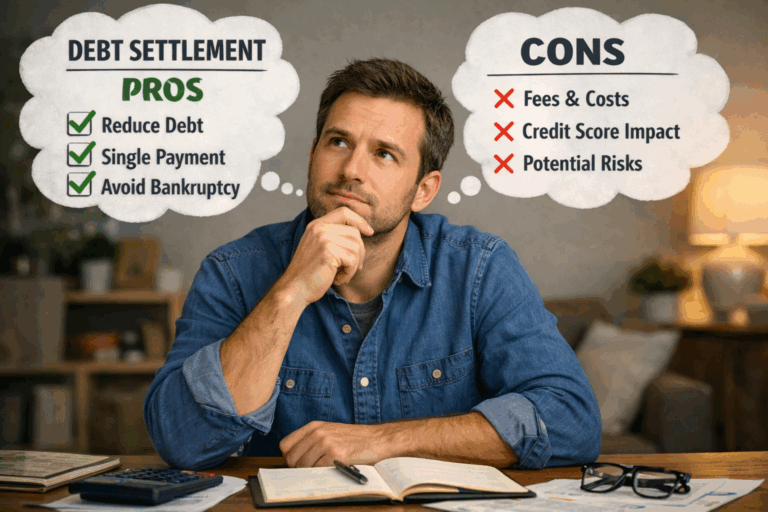
Debt settlement focuses on negotiating with creditors or collection agencies to resolve unsecured debts for less than the full principal amount owed. This option is built for people facing long-term financial trouble who do not make enough money to pay off their balances.
Settlement can help clear large debts but it carries real risks:
- Programs typically require redirecting funds into a dedicated savings account while payments to creditors are paused, which can result in credit score declines and collection calls.
- Creditors are not legally required to accept settlement offers, and results cannot be guaranteed.
- Forgiven debt amounts may be treated as taxable income unless you qualify for an IRS insolvency exclusion.
- Legitimate performance-based settlement firms charge service fees only after a debt is successfully settled and paid.
Consumers considering debt settlement for high-interest debt should carefully review their financial standing, calculate program fees, and evaluate all associated risks before enrolling.
What Happens If You Only Miss a Minimum Payment?
Missing a minimum payment can lead to late fees, loss of promotional rates, and loss of the grace period on new purchases. If a payment becomes 30 days late, the creditor may report it to the credit bureaus, which can hurt your credit score. Continued nonpayment can result in growing interest, collection calls, charge-off, or even a lawsuit.
If you keep ignoring the debt, they may take harder steps, such as suing you in court, freezing your bank account, sending your account to a collections agency, or garnishing your wages.
How Does a Debt Relief Action Plan Work?
Follow these steps instead of letting the deadlines pass:
Immediately:
- Calculate your exact take-home pay against essential shelter and food costs.
- Make a complete inventory of all card balances, current interest rates, minimum dues, and payment dates.
- Suspend recurring nonessential card charges right away.
Within the Next Few Days:
- Call card issuers to request hardship assistance or interest reductions.
- Depending on your situation, you might also look at nonprofit debt management or a formal debt consolidation loan.
- Compare program fees and repayment timelines.
Before Enrolling in Any Program:
- Get all fee structures confirmed in writing and verify your eligibility.
- Make sure the required monthly deposit fits realistically within your household budget.
Conclusion
Falling behind on credit card payments is stressful, but ignoring the math will not make the balances disappear. Taking proactive steps puts you back in control of your financial future. That can mean restructuring your budget, securing a temporary hardship plan, or enrolling in a formal relief program. Choose the path that matches your current income and stick to the plan.

Attorney Loretta Kilday has over 36 years of litigation and transactional experience, specializing in business, collection, and family law. She frequently writes on various financial and legal matters. She is a graduate of DePaul University with a Juris Doctor degree and a spokesperson for Debt Consolidation Care (DebtCC) online debt relief forum